Flying Ahead - Virgin Australia Lounges
In 2012, Virgin Australia was doing more than changing its name and identity.
It was rethinking what an airline lounge could be
Our involvement in the Virgin Australia lounge programme came at a pivotal point in the airline’s evolution from Virgin Blue to Virgin Australia.
The change represented much more than a rebrand. Virgin was repositioning the airline and developing a more sophisticated customer experience, with the lounges becoming an important physical expression of the new Virgin Australia identity.
Working with TZG Architects, our team was involved across lighting, signage and audio-visual systems, helping bring together architecture, brand, information and emerging digital technology across the Australian lounge network.
A Very Different Technology Landscape
Looking back from today, it is easy to underestimate how quickly technology was changing in 2012.
The first iPad had only been released two years earlier.
Tablets were still a new consumer technology. Digital publications were emerging. Digital signage was in its relatively early stages, and seamless integration between consumer devices, commercial networks, content systems and corporate IT environments could not simply be assumed.
Virgin was already experimenting with how those technologies could become part of the passenger experience.
Early-generation iPads were being provided for customers to use within the lounges, while guests could access complimentary publications including the Australian Financial Review and Sydney Morning Herald.
Today, providing digital content to a tablet seems straightforward.
In 2012, it wasn't.
There were practical questions around connectivity, security, content delivery, device management, reliability and how rapidly evolving consumer technologies could operate within a commercial airline environment.
Solving those integration issues was part of what made the programme interesting.
 Lighting
as Part of the Brand
Lighting
as Part of the Brand
 Lighting
as Part of the Brand
Lighting
as Part of the Brand
Lighting was not considered simply as a technical requirement to illuminate the space.
It formed part of the Virgin Australia customer experience.
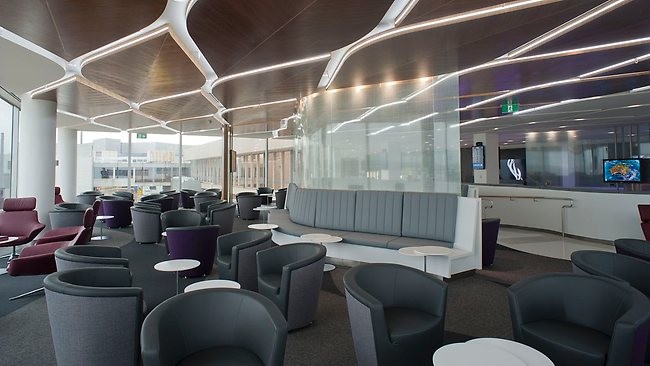
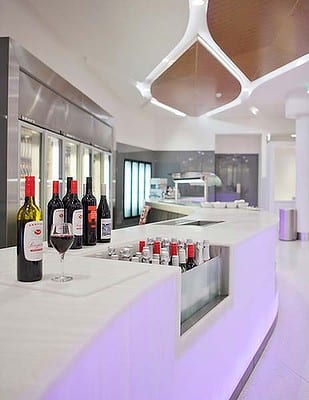
The lighting needed to work with the architecture and interiors to create atmosphere, reinforce different areas within the lounges and support the changing ways passengers used the spaces.
Food and beverage areas, work zones, circulation areas, relaxation spaces and customer service functions all required different visual environments.
At the same time, the overall lighting language needed to support Virgin Australia’s transition towards a more sophisticated and premium brand.
The objective was therefore not simply to meet an illuminance requirement.
It was to use light to help define the experience.
Signage and Brand
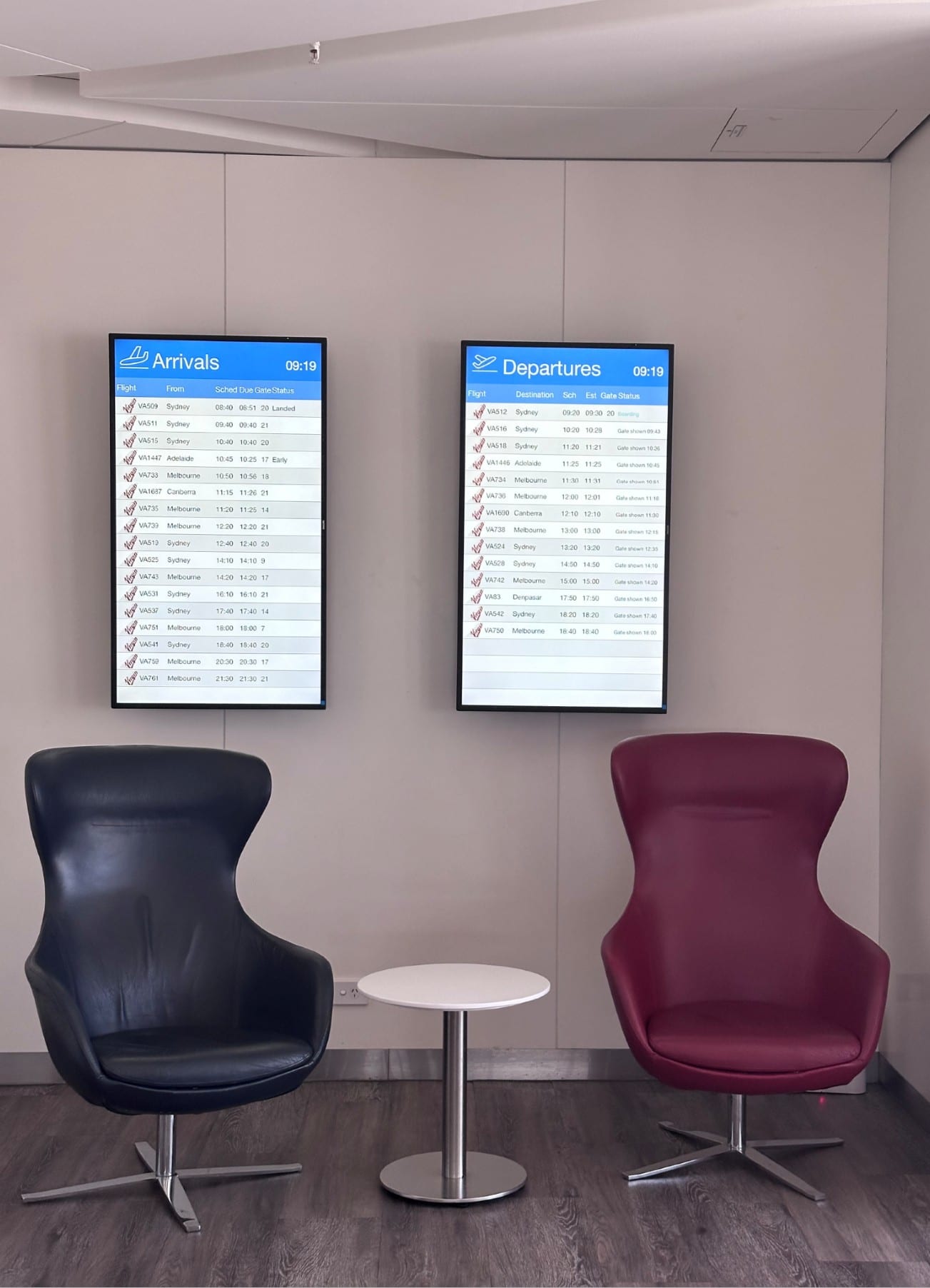
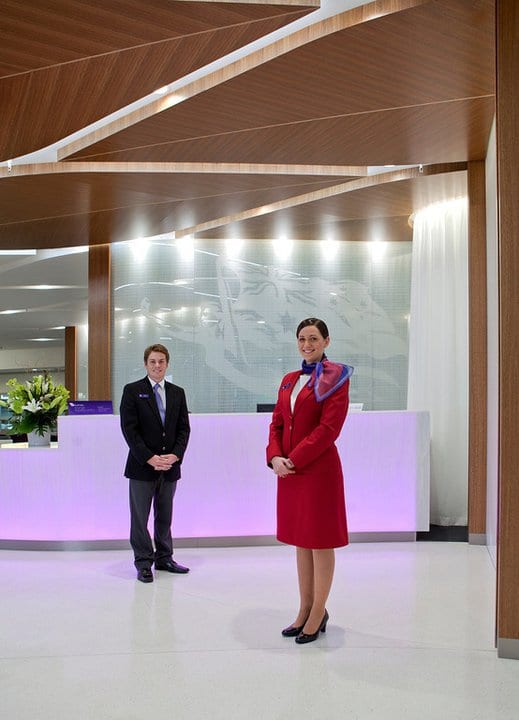
The transition from Virgin Blue to Virgin Australia also required the physical environment to communicate the new brand consistently.
Signage therefore formed another important part of the programme.
Static signage, wayfinding, passenger information and emerging digital displays needed to work together rather than appearing as unrelated additions to the architecture.
Their integration with the lighting was particularly important.
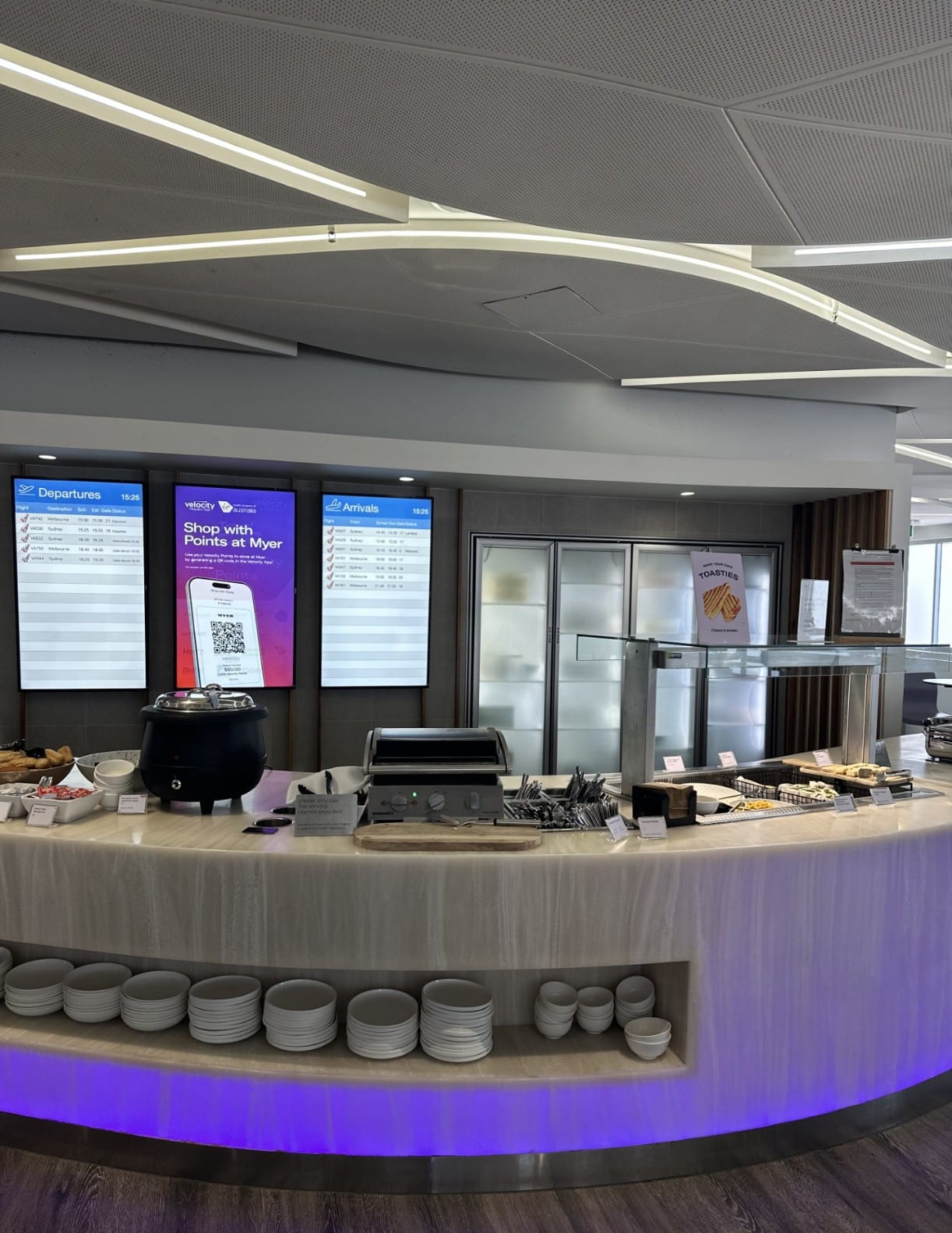
Signs had to be visible without dominating the environment, architectural elements had to retain their hierarchy, and illuminated and digital elements needed to sit comfortably within the overall visual composition of the lounges.
Audio Visual and the Emerging Digital Experience
The AV component reflected another significant change occurring within hospitality environments. Screens were no longer simply televisions and displays were beginning to become sources of information, entertainment, brand communication and customer interaction.
Digital signage was emerging as a genuine alternative to traditional printed information and static displays, while wireless devices were beginning to change how passengers consumed news and entertainment.
Virgin’s introduction of iPads for customers was particularly forward-looking for the period.
The challenge was making these emerging technologies work reliably within an operational lounge environment.
This involved coordination of:
- audio-visual systems;
- displays and emerging digital signage;
- wireless and communications infrastructure;
- content distribution;
- consumer devices operating within commercial IT environments;
- architectural integration of screens and equipment;
- equipment locations and accessibility;
- signage and passenger information;
- lighting around screens and digital displays;
- reliability and ongoing operation; and
- coordination between architects, technology providers, IT teams and airline stakeholders.
The important part was not any individual technology.
It was making them work together.
 Lighting
+ Signage + Audio Visual
Lighting
+ Signage + Audio Visual
 Lighting
+ Signage + Audio Visual
Lighting
+ Signage + Audio Visual
The Virgin Australia lounges demonstrated something that has subsequently become fundamental to the design of airports, hotels, clubs and hospitality environments.
Lighting + Signage + Audio Visual were becoming one customer experience.
Traditionally these disciplines could be designed separately.
By 2012, that approach was becoming increasingly difficult to justify.
A digital display affects the lighting around it.
Lighting affects the readability and prominence of signage.
Signage affects architecture and wayfinding.
Wireless technology changes how customers interact with the space.
AV systems increasingly carry information as well as entertainment.
Once these elements begin interacting, coordination becomes as important as the individual systems themselves.
Our role placed us at many of those interfaces.
Designing From the Customer Backwards
The programme also reinforced an approach that has remained important in our work.
The starting point should not necessarily be the technology.
It should be the customer.
What does the passenger need to see?
Where do they want to work?
Where do they want to relax?
How do they find information?
How do they move through the lounge?
Where does technology improve the experience, and where should it disappear into the architecture?
Those questions lead naturally into decisions about lighting, signage, AV, communications and controls.
They also encourage different consultants and disciplines to work together rather than designing individual systems in isolation.
Flying Ahead
Many of the technologies being explored in the Virgin Australia lounges in 2012 have since become commonplace.
- Tablets are ubiquitous
- Digital newspapers are normal
- Wireless connectivity is expected
- Digital signage is everywhere
- Screens routinely combine information, entertainment, advertising and wayfinding
- Customers now expect their own devices to connect seamlessly with the environments around them.
That was not the world in which these lounges were being designed. The technology was moving quickly and the rules were still being written. For our team, that made it an exciting period.
We were working with a progressive airline and architectural team at the point where architecture, lighting, signage, communications and digital technology were beginning to converge. It required experimentation, coordination and plenty of practical problem-solving and it provided an early view of something that now seems obvious:
Great customer environments are created when lighting, technology, information and architecture are designed as parts of the same experience — not as separate systems. For us, 2012 was an exciting time to be flying ahead.
Project Snapshot
Client
Virgin Australia
Architect
TZG Architects
Period
Circa 2012
Sector
Aviation | Airport Lounges | Hospitality | Customer Experience
Services / Involvement
Lighting
Signage coordination
Audio Visual
Digital signage integration
Technology coordination
Customer-facing digital systems
Communications and interface coordination
Key Innovation Context
Virgin Blue to Virgin Australia brand transition
Early-generation iPads supplied for lounge customer use
Complimentary digital access to publications including the
Australian Financial Review and Sydney
Morning Herald
Early adoption of digital signage
Integration of emerging consumer technology into a commercial airport environment
Coordination of lighting, signage and AV as components of a single passenger experience
See project profile here.. https://www.haronrobson.com.au/admin/website/pages/edit/?page_id=/projects/commercial-and-office/virgin-australia-airport-lounges/