Power banks on planes - What you need to know about major carriers’ new rules
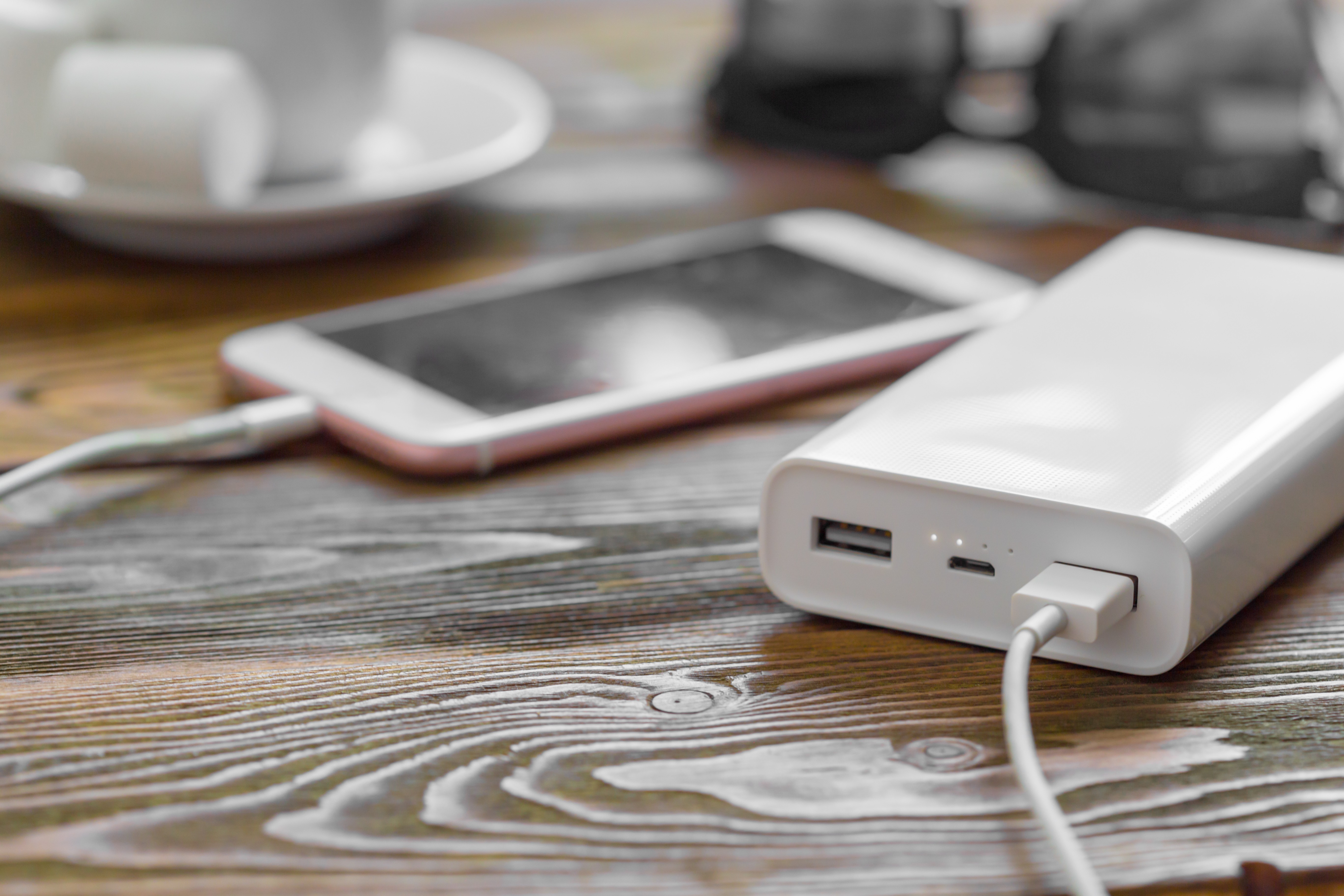
As of December 2025, major Australian airlines have introduced new restrictions on power banks after several in-flight fire incidents linked to lithium batteries. You can still bring a power bank onboard in your carry-on luggage, but you can’t use it during the flight or charge it using the aircraft’s power.
With the holiday period approaching, here’s what you need to know before you fly.
Allowed vs not allowed
First, you are still allowed to carry your power bank on board, but you are not allowed to charge it during flights. Instead, you can still charge your devices through in-seat ports. However, the recharge of power banks through in-seat ports is prohibited.
As far as the storage is concerned, passengers will be required to store power banks in a spot that will be easily accessible. If you are travelling with a smart bag, the battery must also be removed from a bag and stored similarly to a power bank. If the battery is non-removable, the smart bag is not allowed on board.
However, each airlines have different rules regarding the capacity of the power banks and where to put it. Here's a full breakdown:
| Field |
Qantas Group (Qantas, QantasLink, Jetstar) |
Virgin Australia |
| Effective date |
15 Dec 2025 |
1 Dec 2025 |
|
Use power bank onboard (to charge devices) |
Prohibited |
Prohibited |
| Charge power bank onboard (In-seat power/USB) |
Prohibited |
Prohibited |
| Carry-on allowed |
Yes |
Yes |
| Checked baggage |
Prohibited |
Prohibited |
| Quantity limit |
Up to 2 per passenger |
Up to 2 per passenger |
| Size limit (Wh) |
≤160Wh each |
≤100Wh standard >100–160Wh requires approval + declare at check-in (max 2) >160Wh not allowed (except specific mobility-aid exemptions) |
| Storage / accessibility |
Keep with passenger (seat pocket / under-seat; if impossible, nearby overhead) |
Easily accessible (under-seat / seat pocket / on person) Not in overhead locker |
| Labelling required |
Yes: battery specs must be displayed |
Yes: battery specs must be displayed |
| Smart bags (lithium battery) |
Remove battery and carry on/stow like power banks |
Remove battery and carry on/stow like power banks |
What does this mean for you
Now that we are not allowed to use a power bank on board, a charging cable is an essential to travel with. One thing to consider is that most in-seat ports are USB-A while most people carry a USB-C to USB-C, or USB-C to Lightning. Here’s a quick glance of which type of ports each airlines have.
Jetstar notes that refreshed 787 Dreamliners have USB-C at the seat while non-refreshed 787s have USB-A; Qantas provides general guidance on in-seat/AC power but does not standardise one USB type fleetwide, though newer or retrofitted cabins are increasingly adding USB-C (and sometimes both USB-A and USB-C, depending on the seat/aircraft); and for Virgin Australia, USB-A remains common across parts of the fleet with USB-C being introduced progressively as cabin upgrades roll out.
While traveling, it is worth carrying a USB-A charging cable that is compatible with your phone. Or a small adapter to ensure compatibility between your phone and in-seat ports.
Why the ban?
In recent years there have been several in-flight fire cases linked to power banks and other lithium batteries, and airlines are trying to cut the chance of that happening again. Power banks use lithium-ion batteries, which can burn very hot, flare up again after they seem out, and are difficult to deal with in the tight space of an aircraft cabin. The risk is higher when a power bank is being used or charged, or if it is damaged or faulty.
Source: Qantas; Virgin Australia. Accessed 3 Dec 2025.